Death and Stone Sculpture – The Kiss of Memory

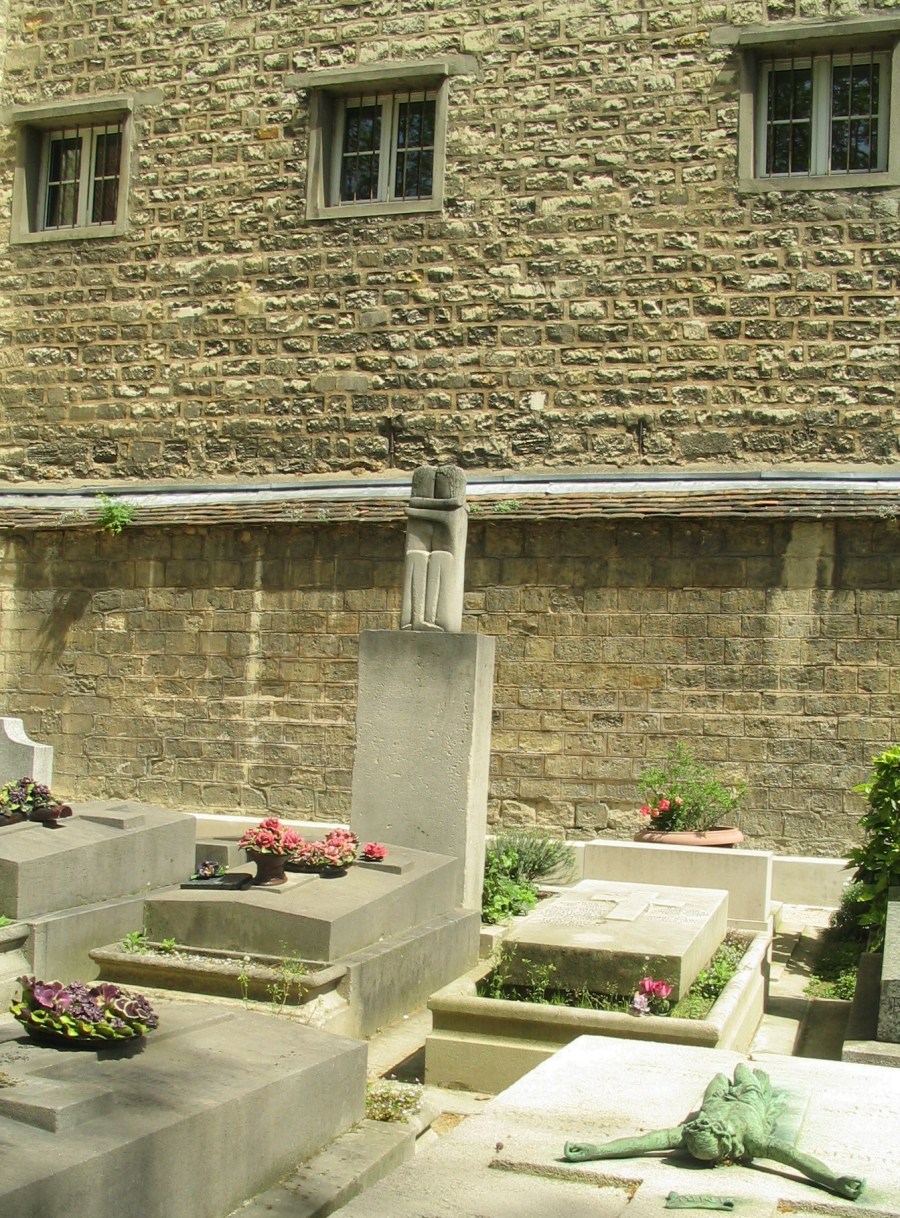
How hard is it to remember people well.  We can remember faces, but even after a few weeks of not being with someone, their memory or the detailed memory of their faces becomes hazy and generalized.  Our minds seem to have a forgetting factor.  In the Cimetiere Montparnasse, in a corner, in the shadow of a tall building, in the sunshine there is a sculpture by the famous Brancusi – “The Kiss”, carved in sandstone, it will weather over the years, but the sculpture itself is really devoid of detail, almost like the artist wants us to realize that the memory of a kiss will start to fade, and the details of the faces also, but we really remember is the fact of a kiss, and the fact that we loved that person, buried there in the ground below.  In life, a kiss can be the most amazing event, since it heralds in itself hope for the future – and so the sculpture for me at least recognises how close and affectionate it might have been, but the details have faded from memory.

There is joy in walking though that cimetiere in Paris.  Particularly when the sun is shining.  There are always flowers, it is always peaceful, and the sculpture that is placed there is imaginative and thoughtful.

We can remember them, the people and who went before, and be thankful that they at least had an artist create for their memory something that said something more evocative than just mere words.

Note:

Really inspired to write this blog entry today,  on the death of the son of friends of ours. His name Daniel.  We knew him as a child, and saw him grow up, but his life ended tragically in difficult circumstances.

Postscript: This blog entry updated.  A memorial service is to be held.  The matter is closed for now.
Mothers Day at Bennelong

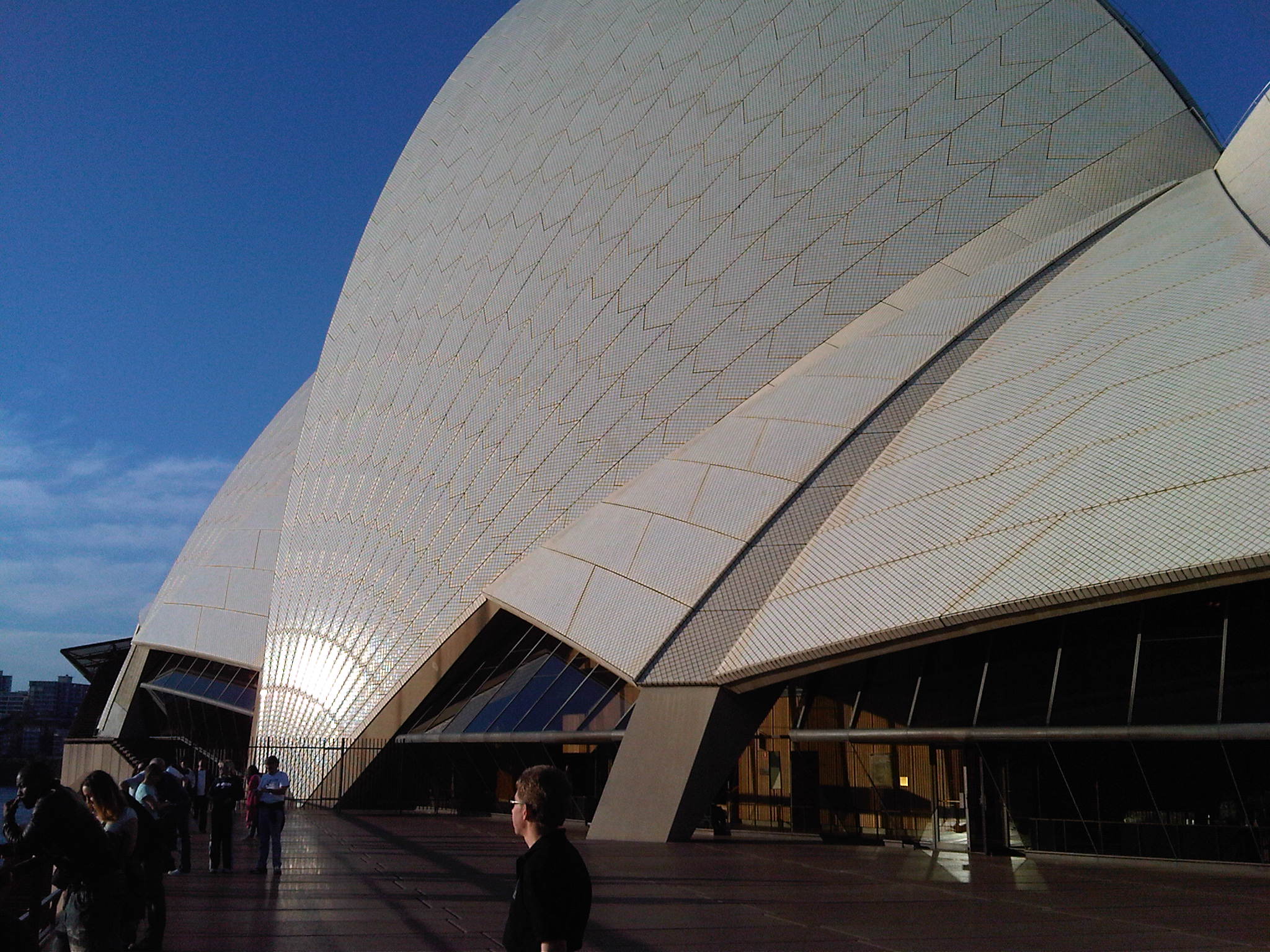
Opera House Ceramic Sunshine Surface

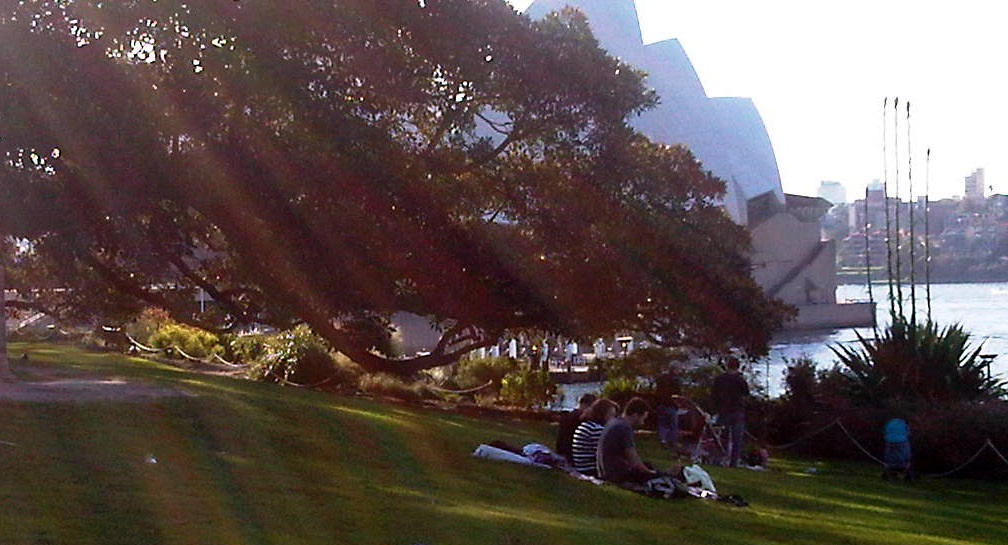
The sun in the early May afternoon is setting toward the north west, with light reflecting from the shell of the bridge side opera house building.  The podium on which the shells are mounted is a platform to walk around and to see from down on the harbour one of the world’s great buildings.

Botanic Gardens - a place to relax in view of the harbour

A short walk from the opera house to the east and around to the south of the Bennelong point, is a great place to sit, and perhaps relax read a book or have a picnic.

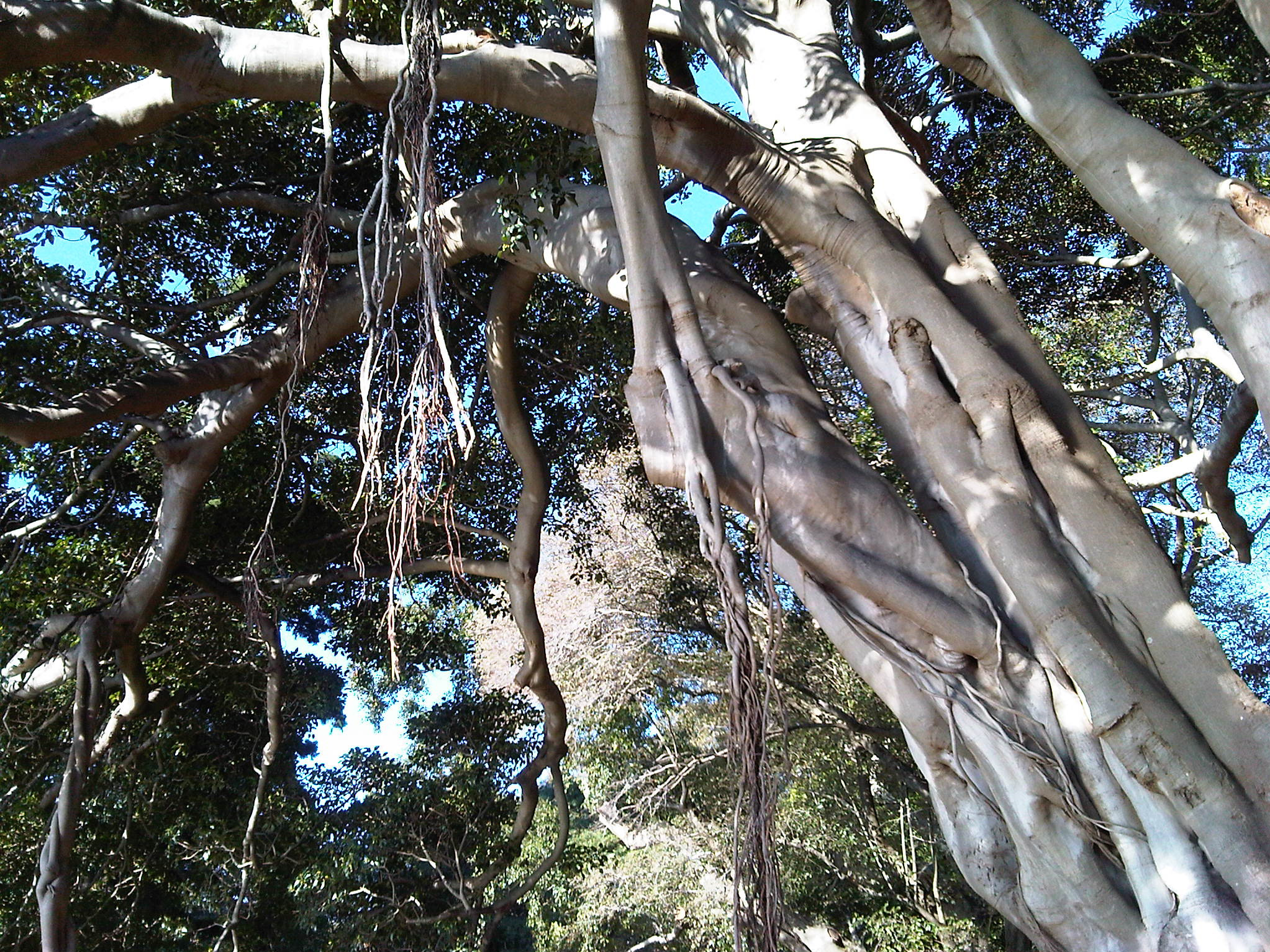
Fig Tree

You will definitely walk past these massive fig trees which populate the front edge of the botanical gardens.  The trees seem to forget, that roots go down first, not last.

View West from the Eastern Arm of the Botanical Gardens Sydney

Innovation 3 – shift and unify the frame of reference

Some time ago, in my power station life, I remember one of the first times i was asked to come up with a long standing set of problems relating to cooling water pumps.  These massive pumps are usually located right down in the basement level of the power plant.  In our case, the plant was situated on a coastal lake, and cooled by the salt water in abundance there. So imagine these pumps, if they don’t start, nothing else does.  Typically getting them to start was horrible, because all sorts of limit switches, around the periphery of the pump discharge or inlet valves would NOT operate.  Either salt water had messed with the contacts, or they had rusted off etc.  So the problem was environmentally endemic, how to find a way to solve this.

All of the off the shelf solutions had been tried.  Waterproof switches, etc.. but these did not handle the constant vibration, once the pump started, which lasted for months etc..

A key question that needs to be asked first up is, how did we get here ?  In a plant, usually created and modified by multiple contractors, there are often multiple circuits representing different functional requirements overlaid on each other.  This can happen over time, and the resulting complexity builds up inside one particular frame of reference.  In this case, the valve shaft.  One input – a massive rotating valve shaft [only turned a quarter of a turn] – and multiple limpet like boolean functions attached to its surface.

The innovation

Shift the Frame – get one or more key functions off the side of the valve shaft into a lower risk frame – i.e. a closed water tight box – but still with the physical valve rotation driving the frame.

Unify the frame – get the myriad of functions accumulated over time, consider them as a whole, and then unify the solution frame – i.e. move all different brand switches, onto the same rotating multi contact device inside the same waterproof box

The Solution

The solution was to shift all of the limit switches, into a sealed stainless steel box, with a small shaft, fitted by flexible coupling to a post welded onto the centre of the valve shaft.

This meant that all of the existing cables could be guided into the box. = no new cables.

All of the plethora of limit switches could be removed and dispensed with. = less complex

All of the limit contacts could be arranged on a rotating shaft, where they could be fixed in position at the same angle they would have been on the valve shaft.

Vibration was removed by use of a rubber tube clamped to the limit switch shaft and the valve post we welded on.

Corrosion was removed by ensuring that everything was in a stainless steel housing, that would most probably not be opened ever again. = long life.

===

Innovation often is about taking all the ideas already engineered and moving them into a new frame of reference, which removes the risk of the engineered solution failing.

Many solutions are put together by multiple people at different times in the life of a plant.  When we get a chance we find time to look at all the problems and all the solutions, and the risk of them failing in a collective whole, then come up with a composite solution, which improves the reliability.

Innovation 2 – A string kind of thing..

Yes, I have a potato, a piece of string, a nail, and a hammer….the first dumb think i think really depends on my mood, is it destructive, constructive, happy, sad, depressed, .. i don’t plan to innovate really, but seeing the odd bunch of things gets my poor little brain going, what to do with the potato…. i don’t want cook it, its got a knob on the side with eyes, and a horn poking out, and its got dirt on it. The horn is suggestive of something, but the eyes are saying, ‘go on – i dare you to do something ‘… i can’t resist… should i use the hammer ? or the nail ? or both ? it would be a shame to me to leave that string,… no its not a ball of string, its actually kind of wound around the nail real tight… some past innovation gone strange… so i would have to unwind it…. hold on.. someone just tweeted me an idea “String theory is universal” from @schroedingerscat – anyway – my string theory is that I will tie that potato up, and get a nail and hammer it in hard to a board. and then it wont escape to bother me around the corners of the universe.  It can just lie there and go moldy and eventually self destruct in public tied up like a dog on a clothesline outback. – but such a cruel innovation.. perhaps I will be merciful to the potato… and plant it, and use the hammer and nail on a plank in the fence to mark the spot with a string to hold it up in the sun, so i can water it now and then.. and life goes on.